it has been twelve years since you left
2026
Domestic Textiles, earth, embroidery thread
dimensions variable
ARTJOG Ars Longa: Generatio
Jogja National Museum
Yogyakarta, Indonesia
it has been twelve years since you left explores the idea of a decaying, fallen ancestral tree that has once lived for millennia witnessing massive ecological and psychological shifts within humanity. Once a living archive, the death of an ancestral tree is a metaphor for the slow deterioration of an abandoned family home. The decaying of the tree causes leaves to gradually shed and accumulate as scattered piles on the ground. The installation depicts the aftermath of the occurrence.
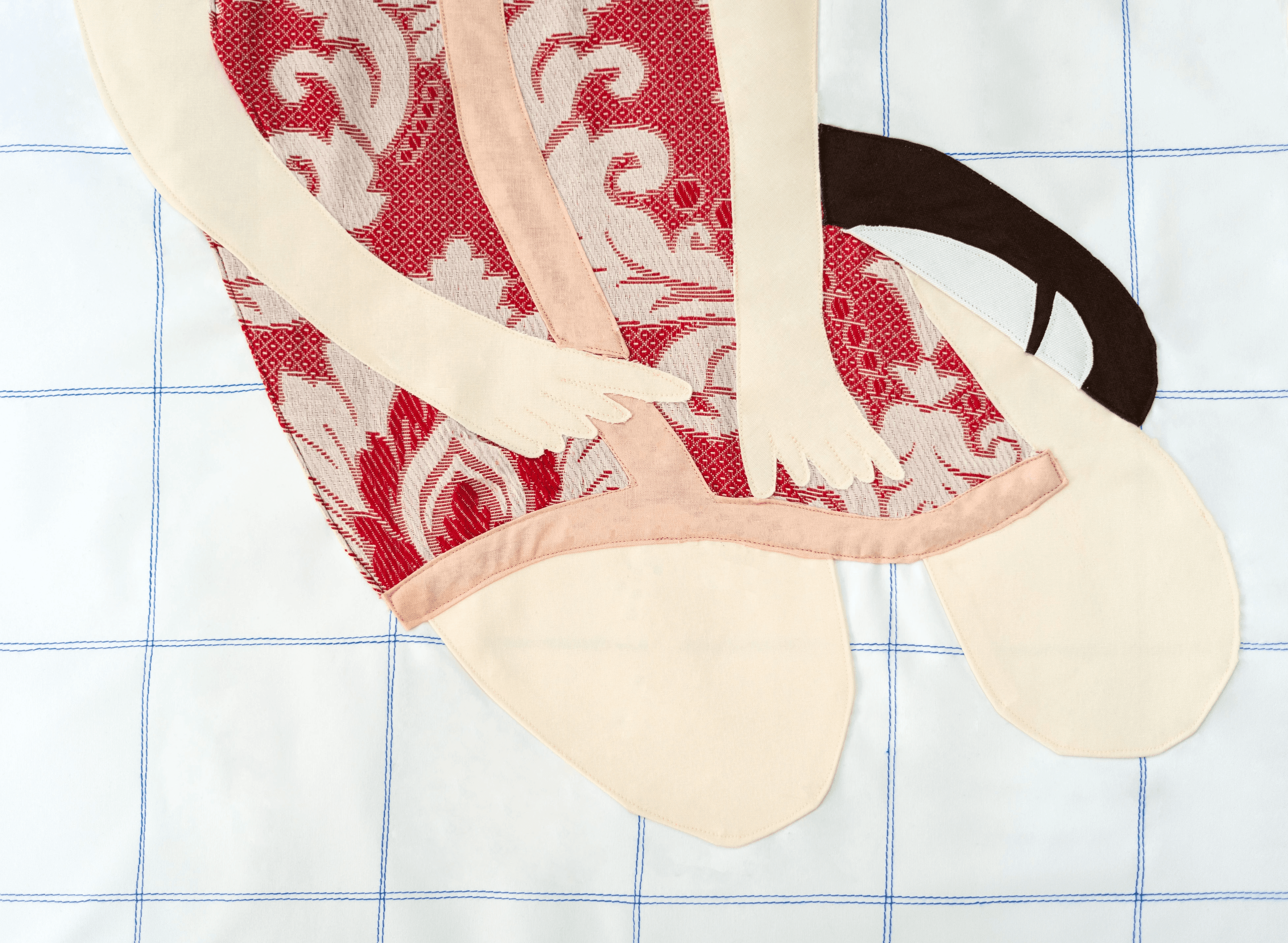
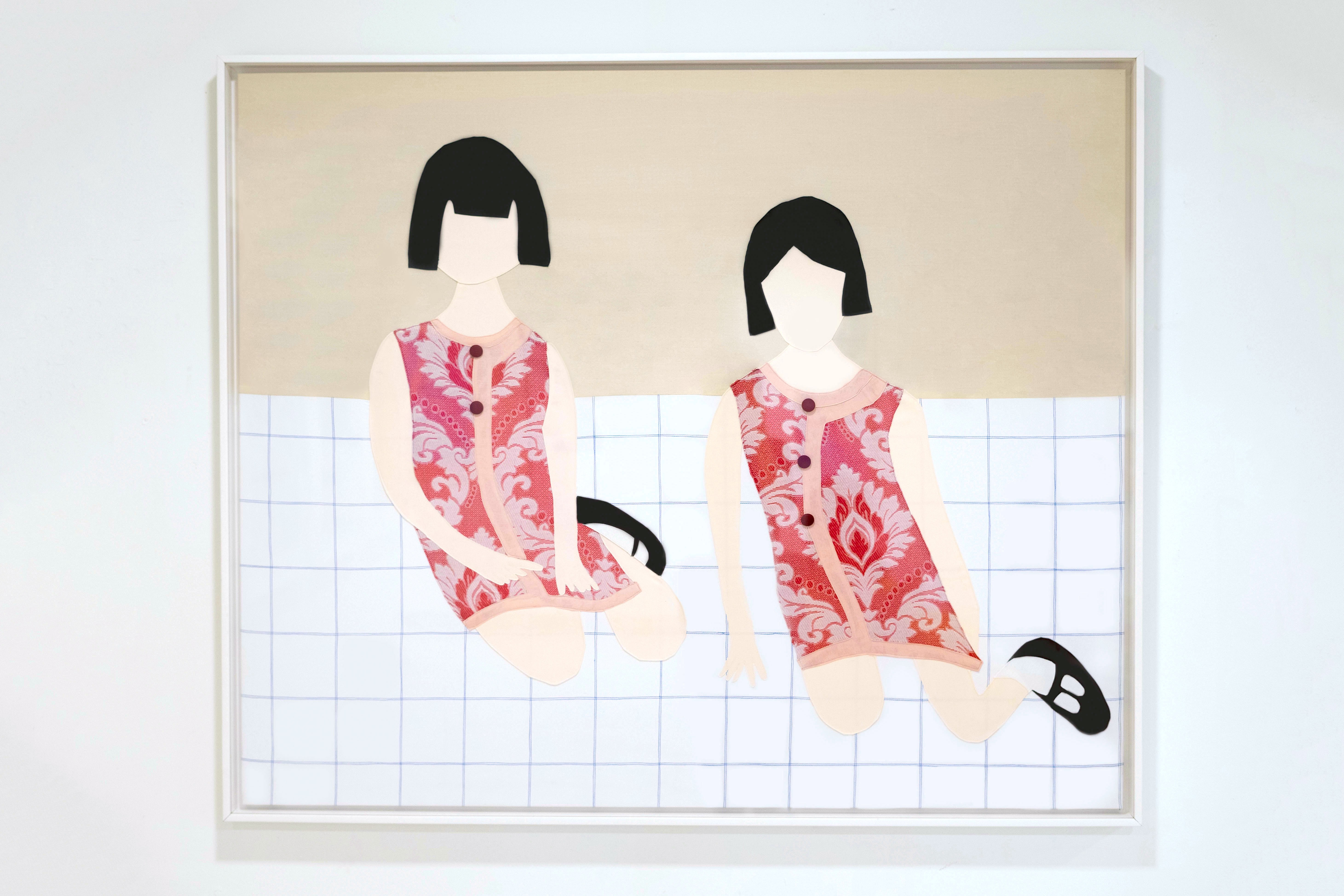
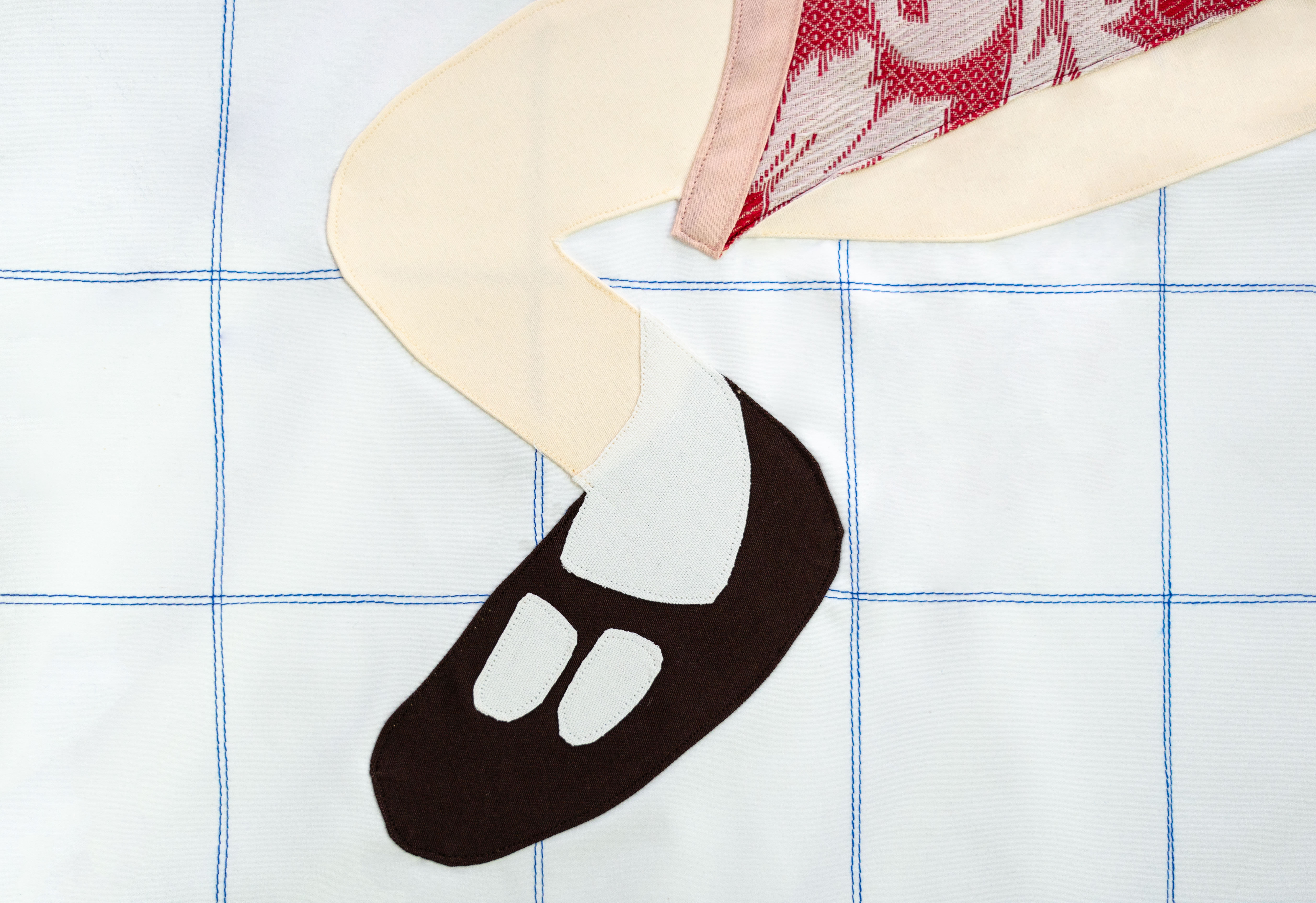
Each leaf is made using domestic textiles inherited from the artist’s late grandparents and embroidered with braille patterns. These embroidered braille patterns are memory-based reinterpretations of different textile motifs from everyday clothing most frequently worn by members of her family. Visitors are encouraged to pick up and touch the leaves, imagining the textural memories. Through themes of grief, loss, and regeneration, the installation explores the formation of collective memories tied to ancestral land.
“During the Japanese Occupation, there were no textile shops. Our Matriarch bought cloths in bulk, sold by the yard, for her many daughters, from travelling cloth peddlers whom they nicknamed ‘le long kor’. The term ‘le long’ comes from the Malay word meaning ‘to auction’ but in this context it meant to ‘sell cheaply’. And the ‘kor’ actually was to describe the sounds from the moving bicycle wheels due to the heavy load it carried.The cloths were mainly plain colours of dark red, blue and brown or otherwise with small or big checks (gingham) all made in China. Floral designs were not available to them possibly because they were more expensive and the ‘le long ko’ thought they were not affordable by his rubber estate clients. Madam Lee Kooi Ching sewed all the clothes for her siblings as well as shirts for her father. Where she learnt this sewing skill from was unknown.”
‘ Tales Of Our Ancestors ’ is a family letter written by my maternal aunt about our family’s lineage which traces back to about five generations of great, great grandparents of Peranakan Chinese and Indonesian descent. This work concentrates on a specific excerpt from the letter on the scarcity of textiles during the Japanese Occupation in Malaya. Textiles as a material has played an important role within generations in our family especially for the women at home. It gave them a medium to self-express and provided a sense of security and comfort during times of violent censorship and colonialism.